
Breast Reduction
Also known as reduction mammaplasty, breast reduction removes excess breast fat, glandular tissue and skin to achieve a breast size in proportion with your body and to alleviate the discomfort associated with overly large breasts.
Overly large breasts can cause some women to have both health and emotional problems. In addition to self-image issues, these women may also experience physical pain and discomfort. The weight of excess breast tissue can impair their ability to lead an active life. The emotional discomfort and self-consciousness often associated with having large pendulous breasts is as important an issue to many women as the physical discomfort and pain.
Breast reduction is a good option for you if:
- your breasts are fully developed
- You are physically healthy
- You have realistic expectations
- You don’t smoke
- Your BMI (body mass index) is less than 32 - your BMI can be calculated by dividing your weight (in Kg) by your height squared (in metres)
- You are bothered by the feeling that your breasts are too large
- Your breasts limit your physical activity
- You experience back, neck and shoulder pain caused by the weight of your breasts
- You have regular indentations from bra straps that support heavy, pendulous breasts
- You have skin irritation beneath the breast crease
- Your breasts hang low and have stretched skin
- You have enlarged areolae caused by stretched skin
Procedural Steps - What Happens During Breast Reduction Surgery
What happens during breast reduction surgery?
Breast reduction is usually performed through incisions on your breasts with surgical removal of the excess fat, glandular tissue and skin. The technique used to reduce the size of your breasts will be determined by your individual condition, breast composition, amount of reduction desired, your personal preferences and the surgeon’s advice.
Anaesthesia
Our surgeons perform all breast reduction under general anaesthesia for your comfort and safety.
Incisions
Incision options include:
- A circular pattern around the areola
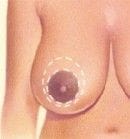)
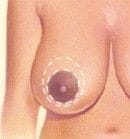
The incision lines that remain are visible and permanent scars, although usually well concealed beneath a swimsuit or bra. This incision is mainly suitable for smaller size reductions with minimal amount of excess skin. Unfortunately, this incision can sometimes lead to stretching of the scar, and expansion of the areola size over time.
- A keyhole or racquet-shaped pattern with an incision around the areola and vertically down to the breast crease
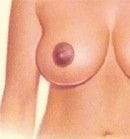)
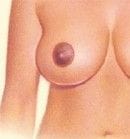
This incision is good for small to moderate size reduction associated with excessive width of breast skin. Reduction performed via this incision can often result in a very conical shaped breast, which takes a minimum of 3 months before settling into a more natural breast shape. Excessive puckering of the skin at the breast crease may require revision surgery.
- An inverted T or anchor-shaped incision pattern
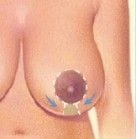)
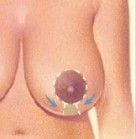
This is the most common type of incision. It allows full degloving of the breast, reshaping of the glands and tightening of the skin from all directions. The periareolar and inframammary component of the scars are usually not visible with time, while the vertical scar will fade. This is the most effective incision for breast reduction in very large breasts.
Removing tissue and nipple repositioning
After the incision is made, the nipple - which remains tethered to its original blood and nerve supply via the underlying breast tissue -is then repositioned. The areola is reduced by excising skin at the perimeter, if necessary. Underlying breast tissue is reduced, lifted and shaped. Sometimes sutures are used to hitch and shape the glandular tissue.
Occasionally, for extremely large pendulous breasts, the nipple and areola may need to be removed and transplanted to a higher position on the breast (technique also known as free nipple graft).
Closing the incisions
The incision edges are then brought together to reshape the now smaller breast. Sutures are layered deep within the breast tissue to create and support the newly shaped breasts. The skin can be closed using sutures, skin adhesives and/or surgical tape. Incision lines are permanent, but in most cases will fade and significantly improve over time.
Specific Risks of Breast Reduction
The decision to have breast reduction surgery is extremely personal and you’ll have to decide if the benefits will achieve your goals and if the risks and potential complications are acceptable.
Your surgeon and our staff will explain in detail the risks associated with surgery. You will be asked to sign consent forms to ensure that you fully understand the procedure you will undergo and any risks or potential complications.
The risks include:
- Unfavourable scarring
- Infection
- Changes in nipple or breast sensation, which may be temporary or permanent
- Anaesthesia risks
- Bleeding (hematoma)
- Blood clots/DVT
- Poor wound healing
- Breast contour and shape irregularities
- Skin discoloration, permanent pigmentation changes, swelling and bruising
- Damage to deeper structures - such as nerves, blood vessels, muscles, and lungs - can occur and may be temporary or permanent
- Breast and nipple asymmetry
- Fluid accumulation
- Excessive firmness of the breast
- Potential inability to breastfeed
- Potential loss of skin/tissue of breast where incisions meet each other
- Potential partial or total loss of nipple and areola
- Deep vein thrombosis, cardiac and pulmonary complications
- Pain, which may persist
- Allergies to tape, suture materials and glues, blood products, topical preparations or injectable agents.
- Fatty tissue deep in the skin could die (fat necrosis)
- Possibility of revision surgery
You should know that:
- The procedure can be performed at any age, but is best done when your breasts are fully developed
- Your ability to breastfeed following reduction mammaplasty may be limited; talk to your surgeon if you are planning to nurse a baby.
- Changes in the breasts during pregnancy can alter the outcomes of previous breast reduction surgery; talk to your surgeon if you are planning to have more children.
- Significant weight fluctuations can also alter the outcome of previous breast reduction; it is often recommended that you wait until you have reached your ‘goal-weight’ prior to breast reduction. Talk to your surgeon if you are planning to lose weight.
Most of the risks are very uncommon, and some people (with particular health problems or specific breast features), may be at higher risk for specific complications. Dr Vrtik will discuss this with you during your consultation if any of these risks are specifically pertinent to you.
Although breast reduction surgery can be an effective procedure where the benefits significantly outweigh the risks, like everything in the practice of medicine and surgery, it is not an exact science. The degree of surgical success can be altered by how each individual’s body responds to surgery and healing. Although good results are expected, there is no guarantee. In some situations, it may not be possible to achieve optimal results with a single surgical procedure; revision surgery may be necessary.
Be sure to ask questions: It’s very important to ask questions about your procedure. It’s natural to feel some anxiety, whether it’s excitement or a bit of preoperative stress. Don’t be shy about discussing these feelings and any specific concerns with your surgeon or any of our staff members.
Postoperative Recovery
When your procedure is complete, dressings or bandages will be applied to the incisions. Your breasts will be supported in a soft elastic tape. A small, thin tube may be temporarily placed under the skin to drain any excess blood or fluid that may collect. You will be expected to stay in hospital overnight.
You will be reviewed in the morning and drains will be removed prior to discharge. It is essential that you keep your tapes intact, clean and dry. At your first postoperative appointment with our nurse, you will be required to bring your soft support bra (in your postoperative pack) so that your tapes can be removed and replaced with the bra. This bra should be worn at all times - in between daily showers - for the first 8 weeks to provide adequate support and protection. Underwire bras should not be worn during this time.
You are restricted from driving for two weeks, and you should minimise your activities for 4 weeks. It is recommended that you do not do any exercise or heavy lifting for at least 6 weeks. Your final postoperative appointment with your surgeon is usually around 8-10 weeks. To find out more about postoperative instructions, please visit ourPatient Resources page.
Results and Expectations
The results of your breast reduction surgery are immediately visible. The first thing you will notice is the relief on your neck and shoulders as the weight of your breasts have been instantly reduced. Over time, post-surgical swelling will resolve and incision lines will fade.
The results of breast reduction surgery will be long-lasting. Your new breast size should help relieve you from the pain and physical limitations experienced prior to breast reduction. A breast reduction also provides a concurrent lift of your overall breast tissue, shape and nipple position. This will permanently alleviate the need for you to wear bras with underwire support.
The long-term outcome of breast reduction can be difficult to predict, as over time, your breasts can change due to aging, weight fluctuations, hormonal factors and gravity. More importantly, the elasticity and stretch of your skin plays a major role in the severity of these changes. Sometimes, a repeat breast lift (without reduction) or breast shape adjustment may be required.
Please note that there are limitations to breast reduction surgery:
- There is no guarantee in breast size
- There is a risk of regrowth, which can be due to weight gain, hormonal changes, hormonal supplements and other endocrine disorders. All of which may result in the need for a second breast reduction
- There is a limit to the amount of breast tissue your surgeon can remove. If too much breast tissue is removed, it will jeopardise the blood supply to your nipples which may result in nipple necrosis, or the need for nipple grafts.
- Enough breast tissue will need to be removed to alleviate symptoms of neck/shoulder and upper back pain. There is also a greater possibility of breast ptosis (droop) in the long term if the breasts are too heavy.
It is strongly recommended that you speak with your surgeon prior to your surgery with any concerns about the possible outcomes. This will help your surgeon decide whether breast reduction is the right operation for your needs.
Cost of Breast Reduction Surgery
Breast reduction surgery is generally considered to be a reconstructive procedure and may be covered by private health insurance when it is performed to relieve medical symptoms. However, some policies may not cover plastic surgery of the breast in general. Each insurance policy varies greatly. Carefully review your policy to determine coverage prior to surgery.
Vocabulary to know
- Areola: Pigmented skin surrounding the nipple.
- Breast reduction: Also known as reduction mammaplasty, the surgical removal of breast tissue to reduce the size of breasts.
- General anaesthesia: Drugs and/or gases used during an operation to relieve pain and alter consciousness.
- Haematoma: Blood pooling beneath the skin.
- Liposuction: Also called lipoplasty or suction lipectomy, this procedure vacuums out fat from beneath the skin’s surface to reduce fullness.
- Mammogram: An x-ray image of the breast.
- Reduction mammaplasty: The surgical removal of breast tissue to reduce the size of breasts.
- Sutures: Stitches used by surgeons to hold skin and tissue together.
(Some Information & Illustrations are courtesy of the American Society of Plastic Surgeons).